
Managing TMJ / TMD Symptoms at Home
Practical self-care strategies that may reduce TMJ discomfort and minimize flare-ups between appointments — from soft-food choices and moist heat to jaw resting position, posture, and stress management. From Dr. Yolanda Cruz's TMJ-focused dental practice on the PATH in downtown Toronto.
While professional assessment and treatment are important for significant or persistent symptoms, the following self-care strategies may help reduce discomfort and minimize flare-ups between appointments. They focus on unloading the jaw — through softer foods, moist heat, an awareness of resting jaw position, posture, parafunctional habits, and stress — rather than on any specific treatment. These are general recommendations and are not a substitute for a professional evaluation. If your symptoms are severe, getting worse, or include locking of the jaw, contact this practice for an examination or call 416-595-5490.
This page sits inside the practice's broader TMJ / TMD overview. For the anatomy and definitions, see what is TMJ / TMD? For the treatment approach used in the office, see TMJ treatment.

Diet modifications & heat therapy
During periods of increased jaw pain, choosing soft foods that require minimal chewing — cooked vegetables, eggs, fish, yogurt, smoothies — can reduce the load on the jaw joints. Avoid chewy meats, hard crusty breads, raw vegetables, and anything that requires prolonged or forceful chewing. Cutting food into smaller pieces also helps.
Heat therapy: applying a warm, moist compress to the jaw and temple area for 10–15 minutes can help ease muscle tension. Warmth increases blood flow to the area and may reduce muscle discomfort. Some patients alternate heat with brief cold applications during acute flare-ups — if you do, do not apply ice directly to the skin and limit each application to a few minutes.
Reviewed by Dr. Yolanda Cruz, DDS · Dr. Yolanda Cruz Dentistry On The Path · Toronto, ON
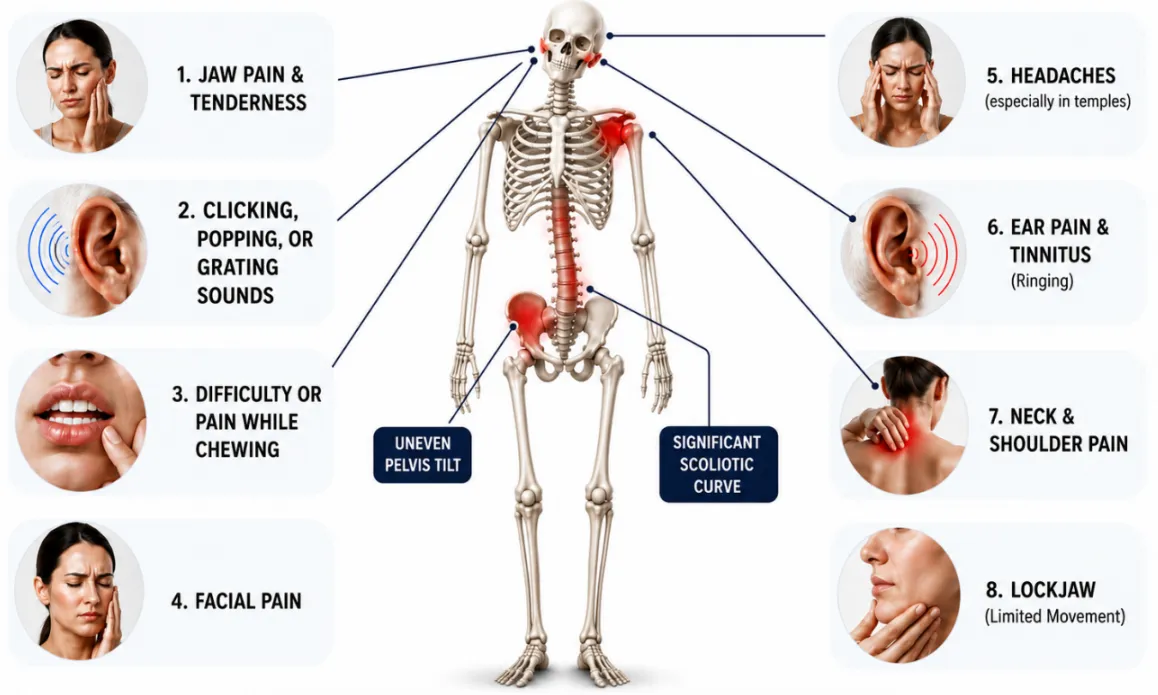
Jaw resting position
Becoming aware of daytime clenching is one of the most useful things you can do. The resting position of the jaw should be: lips together, teeth slightly apart, tongue resting lightly on the roof of the mouth.
If you notice your teeth touching during the day — other than when eating or swallowing — consciously relax your jaw and return to that resting position. Many patients are surprised at how often their teeth are in light contact once they begin checking.
Your dentist or physiotherapist can guide you on specific jaw exercises if appropriate. Doing exercises without guidance — particularly in a joint that is already inflamed or has disc displacement — can sometimes make symptoms worse, which is why an in-office evaluation is the safer starting point.
Parafunctional habits to avoid
Chewing gum, biting nails or pens, resting your chin on your hand, and clenching during stress all place load on the TMJ. Awareness of these habits — and consciously interrupting them — can be helpful.
- Chewing gum, especially for long periods
- Biting nails, pens, pencils, or the inside of the cheek
- Resting your chin on your hand at a desk
- Holding the phone between your ear and shoulder
- Clenching the teeth during stress, concentration, or exercise
- Opening the mouth very wide for prolonged dental treatment or yawning — support the chin with a hand when you can
Stress management & over-the-counter pain relief
Stress is a common trigger for jaw clenching and bruxism. Diaphragmatic breathing, progressive muscle relaxation, and mindfulness are strategies that some patients find helpful for reducing muscle tension. They are not a treatment for the joint itself, but they reduce one of the major contributors to flare-ups.
Over-the-counter pain relief: non-prescription anti-inflammatories such as ibuprofen can be used on a short-term basis during flare-ups. Please consult your healthcare provider before using any medication on an ongoing basis, particularly if you have a history of gastrointestinal, kidney, or cardiovascular issues, or if you are taking other medications.
Do's and don'ts during a TMJ flare-up
A short, scannable summary of the same self-care strategies organized as do's and don'ts. Print this list, or keep it visible until the habits become automatic.
Do: choose soft foods
Cooked vegetables, eggs, fish, yogurt, smoothies. Cut food into smaller pieces. Avoid prolonged or forceful chewing.
Do: apply moist heat
A warm, moist compress to the jaw and temple area for 10–15 minutes can ease muscle tension and improve local blood flow.
Do: keep the jaw at rest
Lips together, teeth slightly apart, tongue resting lightly on the roof of the mouth. Catch yourself when you drift into clenching.
Don't: chew gum or hard foods
Gum, chewy meats, hard crusty breads, raw vegetables, ice, and nuts all keep the joint under sustained load. Skip them during a flare-up.
Don't: bite, lean, or cradle
No nail or pen biting, no resting the chin on your hand, no holding the phone between ear and shoulder. Each one quietly loads the TMJ.
Don't: open very wide
Yawning fully, prolonged dental visits, and large bites all stretch the joint. Support your chin with a hand on big yawns; ask for breaks at the dental office.
A TMJ-friendly day, in eight habits
An order-of-operations version of the same recommendations — what a day looks like when you're actively unloading the jaw. None of these replace an in-office evaluation, but together they shift the load off the joint.
- Morning check-in When you wake, notice whether your jaw is tense and your teeth are touching. Drop the jaw to the resting position before getting out of bed.
- Soft breakfast Choose softer options — eggs, yogurt, smoothies, oatmeal — especially if mornings are when your jaw feels worst.
- Desk posture reset Set up the screen at eye level and check in on forward-head posture every hour. Roll the shoulders back; tuck the chin gently.
- Stop the small habits No gum, no pen biting, no chin-on-hand. The first week of awareness is the hardest; after that they fall away.
- Stretch and breathe Two or three times during the day, take five slow diaphragmatic breaths and consciously relax the jaw, neck, and shoulders.
- Lunch and dinner: soft and small Cut food into smaller pieces. Avoid hard crusty breads, chewy meats, and raw vegetables during a flare-up.
- Evening heat Apply a warm moist compress to the jaw and temples for 10–15 minutes once the day's load is off.
- Wind-down before bed Reduce screen time, stretch the neck, and check the jaw is at rest as you fall asleep. If a custom appliance has been prescribed, wear it as directed.
When self-care isn't enough
Home strategies can ease mild flare-ups, but they are not a substitute for a professional evaluation. Please book an appointment — or call 416-595-5490 — if any of the following apply:
- Jaw pain or muscle pain that lasts more than two to three weeks despite home care
- Pain that interferes with sleep, work, or normal eating
- Jaw locking in an open or closed position — even briefly
- A sudden change in how your teeth come together (a new bite shift)
- Loud clicking, popping, or grating sounds — especially if they are painful — see clicking & popping: what does it mean?
- Headaches, ear pain, or neck tension that you suspect may be jaw-related and that are not improving
- You are using over-the-counter pain medication regularly for jaw or head symptoms
An evaluation can identify which of the contributing factors — muscle, joint, bite, posture, stress, structural — is actually driving your symptoms. From there, treatment is matched to the diagnosis. See your visit & diagnostic process for a walk-through of what to expect at the first appointment, or request an appointment directly.
Dr. Cruz's clinical note
"Home care is genuinely useful in TMJ — not because it cures the condition, but because most flare-ups are made worse by something the patient is doing without realizing. Soft food, moist heat, resting jaw position, and stress awareness all unload the joint while we work out what is structurally going on."
"That said, if symptoms have been present for more than a few weeks, or if they're interfering with sleep, work, or eating, home care is not the answer on its own. By that point we need imaging, a comprehensive examination, and a working diagnosis — and the home program becomes one piece of a larger plan, not the whole plan."
— Dr. Yolanda Cruz, DDS, Dr. Yolanda Cruz Dentistry On The Path, Downtown Toronto
Frequently asked questions about TMJ self-care at home
Choose soft foods, apply moist heat for 10–15 minutes, keep the jaw at rest (lips together, teeth slightly apart, tongue lightly on the roof of the mouth), stop habits like gum chewing and chin-leaning, watch your posture at screens, and use stress-reduction techniques. Short-term over-the-counter anti-inflammatories such as ibuprofen can also help during a flare-up — consult your healthcare provider before taking any medication ongoing. These are general recommendations and are not a substitute for a professional evaluation.
Avoid chewy meats, hard crusty breads, raw vegetables, gum, ice, nuts, and anything that requires prolonged or forceful chewing. Cut food into smaller pieces. Stick to options that need minimal chewing — cooked vegetables, eggs, fish, yogurt, smoothies. The goal during a flare-up is to unload the joint, not to test it.
Warm, moist heat for 10–15 minutes on the jaw and temple area is the simplest first step — it eases muscle tension and improves local blood flow. Some patients alternate heat with brief cold applications during acute flare-ups. If you use cold, do not apply ice directly to the skin, and limit each application to a few minutes. If you are unsure which is right for your case, raise it at your next appointment.
Lips together, teeth slightly apart, tongue resting lightly on the roof of the mouth. The upper and lower teeth should not be in contact during the day other than when eating or swallowing. Becoming aware of when your teeth are touching during the day — and consciously dropping the jaw back to the resting position — is one of the most useful things a patient with TMJ symptoms can do.
It depends on what is actually wrong with the joint. Jaw exercises can be helpful for some presentations and counter-productive for others — in a joint that is already inflamed or has disc displacement, untargeted exercises can make symptoms worse. Your dentist or physiotherapist can guide you on specific exercises if they are appropriate for your case. An evaluation is the safer starting point.
If pain has lasted more than two to three weeks despite home care, if it interferes with sleep, work, or eating, if your jaw has locked — even briefly — if your bite has changed, or if you are using over-the-counter pain medication regularly, please book an evaluation. Request an appointment or call 416-595-5490. Home strategies complement professional care; they do not replace it.
Medical Disclaimer
This content is for informational purposes only and does not constitute dental or medical advice, diagnosis, or treatment. The self-care strategies on this page are supportive measures intended to help reduce symptoms between professional appointments — they are not a substitute for an in-office evaluation. TMJ / TMD disorders have multiple possible causes and treatment outcomes vary by individual. Some cases require referral to an oral and maxillofacial surgeon or another specialist. Consult Dr. Yolanda Cruz or another qualified dental professional regarding your symptoms and treatment options. Always speak to your healthcare provider before starting any new medication on an ongoing basis. Individual results may vary.
Home care helping — but symptoms still there?
Book a focused TMJ evaluation with Dr. Cruz. You'll leave with a working diagnosis and a written plan that combines in-office treatment with the home program — no commitment to treatment on day one.